Cold Plunge Benefits: What the Science Actually Says
By PLUNJ · November 17, 2026
Cold plunging has gone from fringe to everywhere. Pro athletes do it. Podcasters swear by it. Your neighbor probably has a tub on the back patio. So are cold plunges actually good for you, or is it just a very cold trend?
Here's the honest answer: the research supports real benefits for muscle recovery, mood, and alertness, with promising but earlier-stage evidence for metabolism and immunity. It's not magic, and it's not for everyone. But done right, it's one of the most accessible recovery tools out there. Here's what the science says, minus the hype.
What Happens to Your Body in the Cold
The moment you hit cold water, your body goes into a coordinated stress response. Your breathing quickens, your blood vessels constrict, your heart rate spikes, and your nervous system floods with norepinephrine. In a well-known study, immersion in 14°C (57°F) water raised norepinephrine by about 530% and dopamine by about 250%.
That chemical surge is behind a lot of what plungers describe: the sharp focus, the lift in mood, the "I can do anything" feeling when you climb out. Then, as you warm back up, blood vessels reopen and circulation rushes back through your tissues. That's the foundation for nearly every benefit below. For a deeper look, read our guide to cold water's effect on the nervous system.
The Research-Backed Cold Plunge Benefits
1. Faster Muscle Recovery and Less Soreness
This is the most established benefit. A large Cochrane review found that cold water immersion after exercise reduced delayed onset muscle soreness (DOMS) compared with rest or no intervention. Cold constricts blood vessels and dials down inflammation and swelling, which means you feel better sooner and can train again sooner.
One caveat: if you're lifting for size and strength, plunging immediately after every session may blunt muscle-building adaptations. We break down the timing in should you cold plunge before or after a workout.
2. Better Mood, Energy, and Mental Clarity
That norepinephrine and dopamine bump isn't just a feeling. Cold exposure reliably increases alertness, and regular practice appears to improve how people handle stress. Small studies of regular cold water swimmers have reported improved mood and well-being, though more large, controlled trials are still needed. Many members describe the plunge as a reset button for a stressful day.
3. A Stronger Stress Response
Cold water is a controlled, short-term stressor. When you stay calm and keep your breathing steady while your body is screaming at you to get out, you're training your nervous system to do the same thing in real life. It's one of the reasons plungers say the benefits go beyond the physical.
4. A Metabolic Boost (Modest, but Real)
Your body burns energy to stay warm, and cold exposure can activate brown fat, the tissue that generates heat. Research from Søberg and colleagues found that regular cold exposure, particularly when paired with heat, was linked to improved metabolic outcomes in winter swimmers. Cold plunging is not a weight-loss plan by itself, but it can be a useful piece of the puzzle.
5. Possible Immune Support
A large Dutch trial of more than 3,000 adults found that people who ended their showers with 30 to 90 seconds of cold water took about 29% fewer sick days from work, even though the number of illnesses didn't change (Buijze et al., 2016). The evidence here is early, so treat it as a promising signal, not a guarantee.
6. Better Sleep
Many people report deeper sleep on plunge days. The likely drivers are the post-plunge relaxation response and the drop in core temperature that your body naturally associates with sleep.
Cold Plunge Risks to Take Seriously
Cold plunging is safe for most healthy adults when done correctly, but the risks are real.
- Cold shock response. Sudden immersion causes an involuntary gasp and a spike in heart rate and blood pressure. Enter slowly and focus on long, slow exhales.
- Hypothermia. Staying in too long or in water that's too cold can drop your core temperature. Keep sessions short, typically 2 to 5 minutes.
- Cardiovascular strain. The heart rate and blood pressure swings can be dangerous for people with heart conditions.
- Never plunge alone in unsupervised open water. A staffed studio with a controlled, monitored setup is a very different risk profile from a frozen lake.
Who Should Talk to a Doctor First
Check with your physician before plunging if you have heart disease, high blood pressure, an irregular heart rhythm, Raynaud's disease, or a history of stroke, or if you're pregnant. If you're not sure whether it's safe for you, ask first. It's a two-minute conversation that's worth having.
How to Get Started
- Start short. 30 to 60 seconds is plenty for your first sessions.
- Control your breath. Long exhales calm the cold shock response.
- Build gradually. Work toward 2 to 5 minutes over several weeks.
- Be consistent. 2 to 4 sessions per week is the sweet spot. Here's how often you should cold plunge.
- Pair it with heat. Alternating with sauna amplifies the benefits. Read about the benefits of contrast therapy.
The Bottom Line
Are cold plunges good for you? For most healthy people, yes. The strongest evidence is for recovery and mood, with promising signals for metabolism, immunity, and sleep. It's a tool, not a cure-all, and the best results come from consistency, smart timing, and respect for the cold.
Ready to Feel It for Yourself?
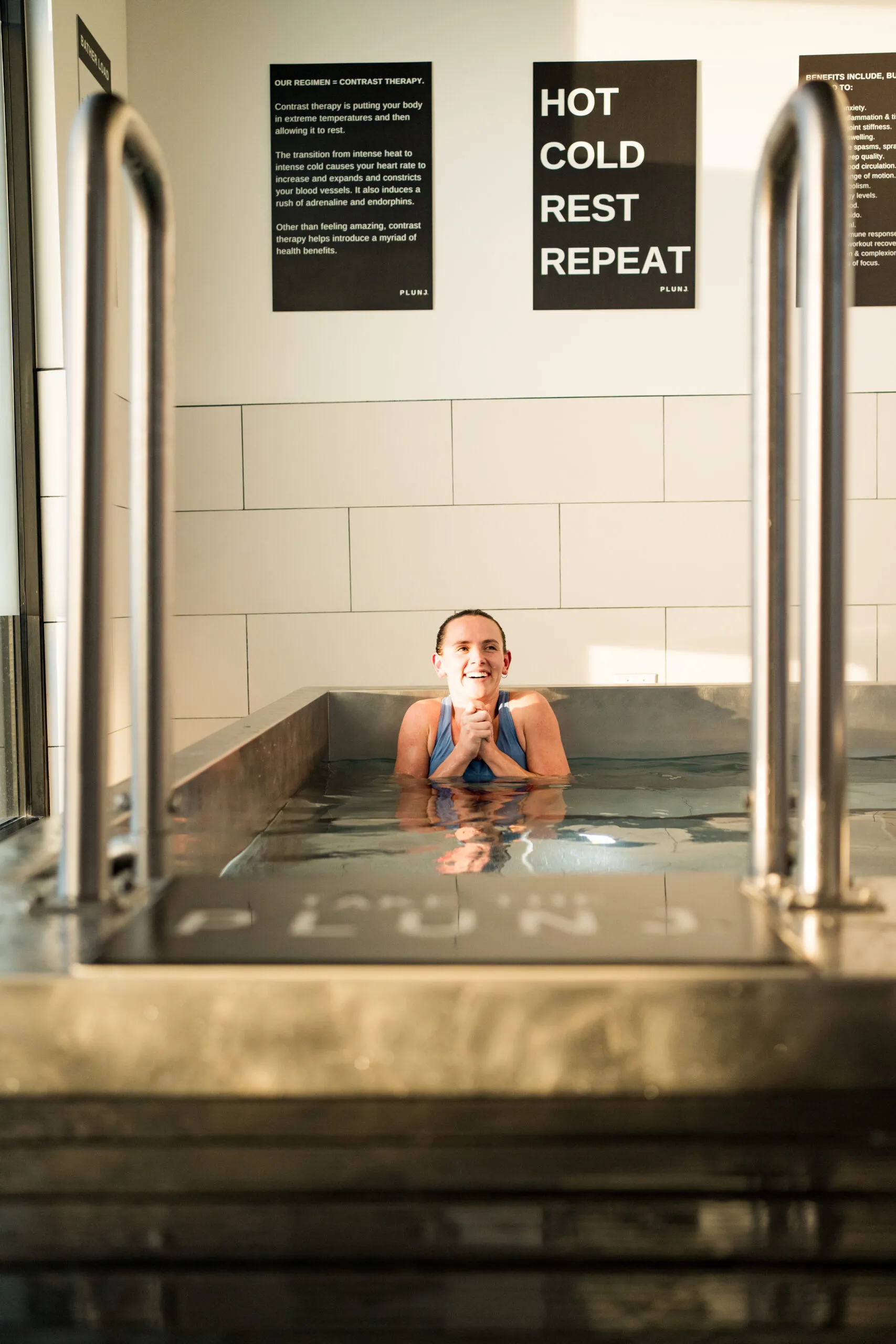
Reading about the cold is one thing. Getting in is another. At PLUNJ, our studios take the guesswork out with dialed-in temperatures, a clean setup, and sauna on-site so you can do the full hot-cold-rest-repeat regimen.
Find a PLUNJ studio near you and book your first plunge.
Sources:
Buijze, G. A., Sierevelt, I. N., van der Heijden, B. C. J. M., Dijkgraaf, M. G., & Frings-Dresen, M. H. W. (2016). The effect of cold showering on health and work: A randomized controlled trial. PLOS ONE, 11(9), e0161749.
Bleakley, C., McDonough, S., Gardner, E., Baxter, G. D., Hopkins, J. T., & Davison, G. W. (2012). Cold-water immersion (cryotherapy) for preventing and treating muscle soreness after exercise. Cochrane Database of Systematic Reviews, (2), CD008262.
Šrámek, P., Šimečková, M., Janský, L., Šavlíková, J., & Vybíral, S. (2000). Human physiological responses to immersion into water of different temperatures. European Journal of Applied Physiology, 81(5), 436–442.
Søberg, S., Löfgren, J., Philipsen, F. E., et al. (2021). Altered brown fat thermoregulation and enhanced cold-induced thermogenesis in young, healthy, winter-swimming men. Cell Reports Medicine, 2(10), 100408.
Kunutsor, S. K., Lehoczki, A., & Laukkanen, J. A. (2025). The untapped potential of cold water therapy as part of a lifestyle intervention for promoting healthy aging. GeroScience.