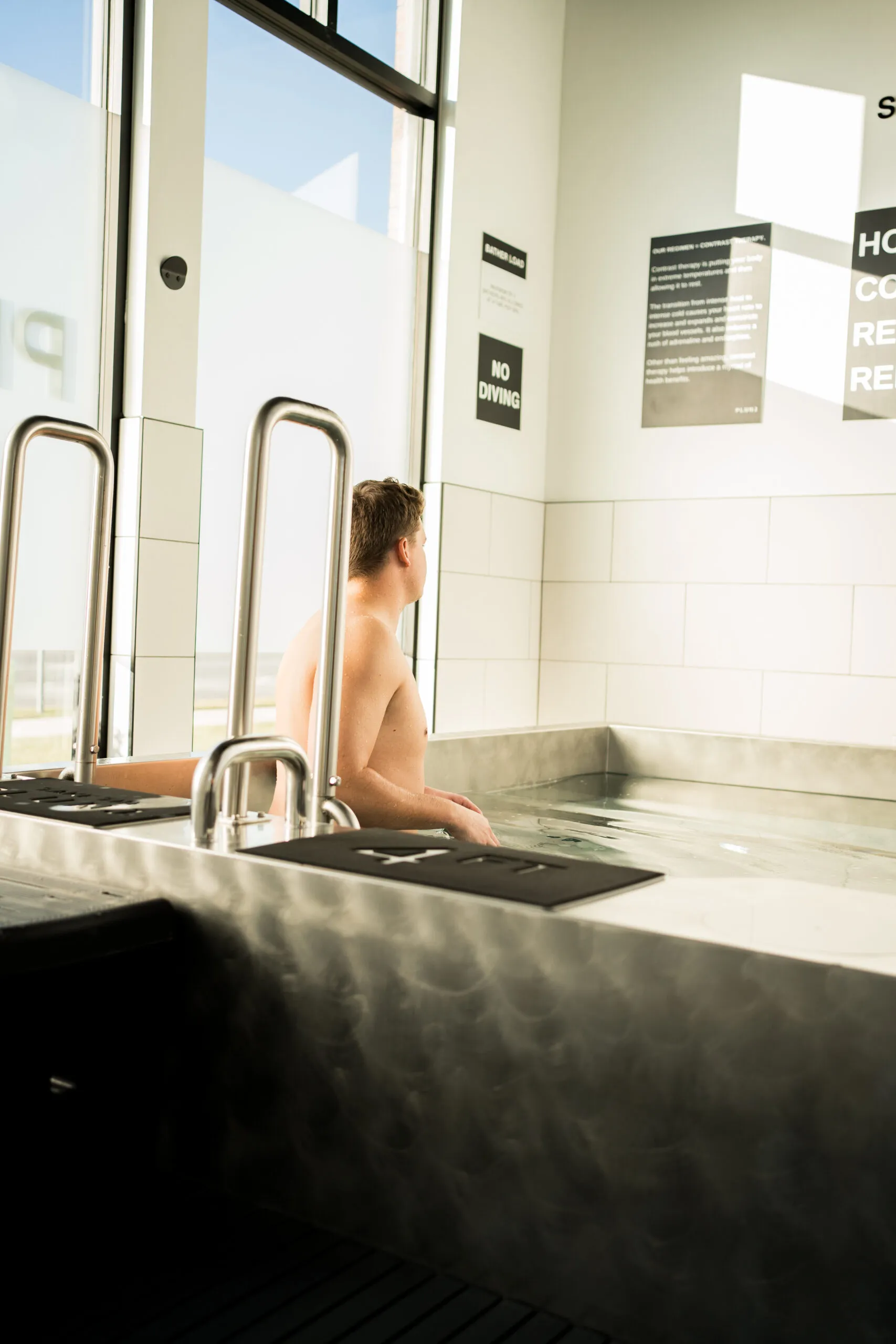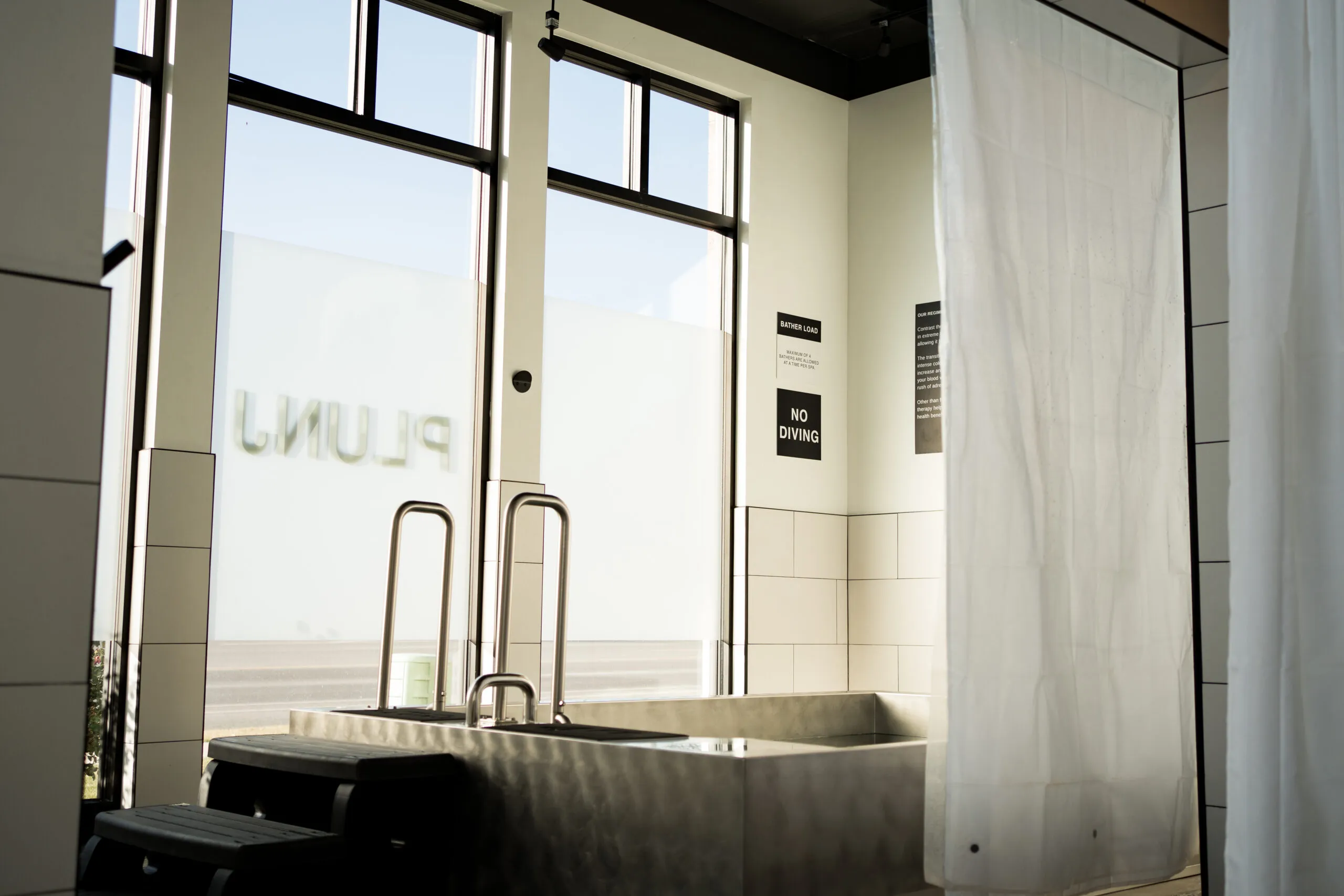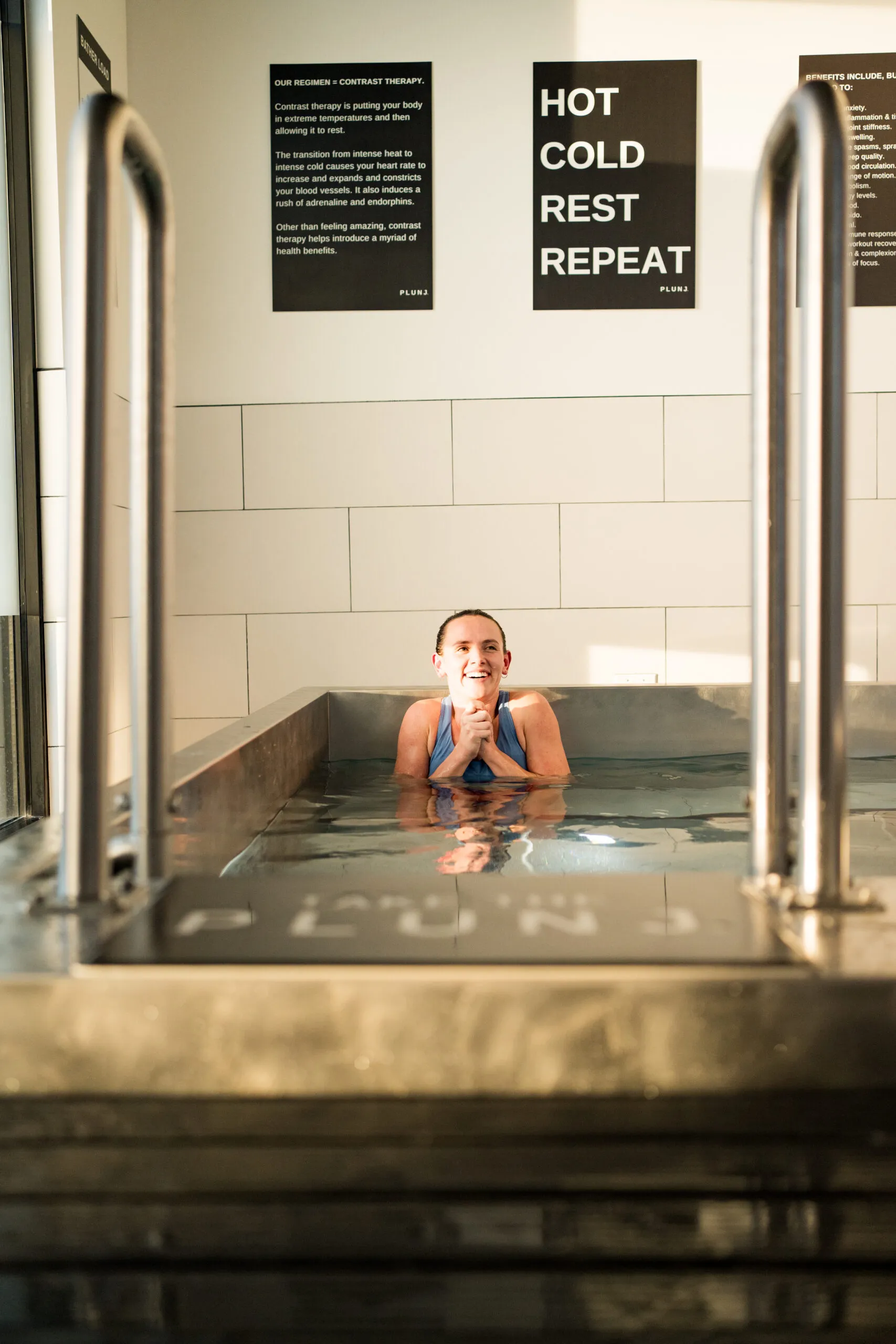
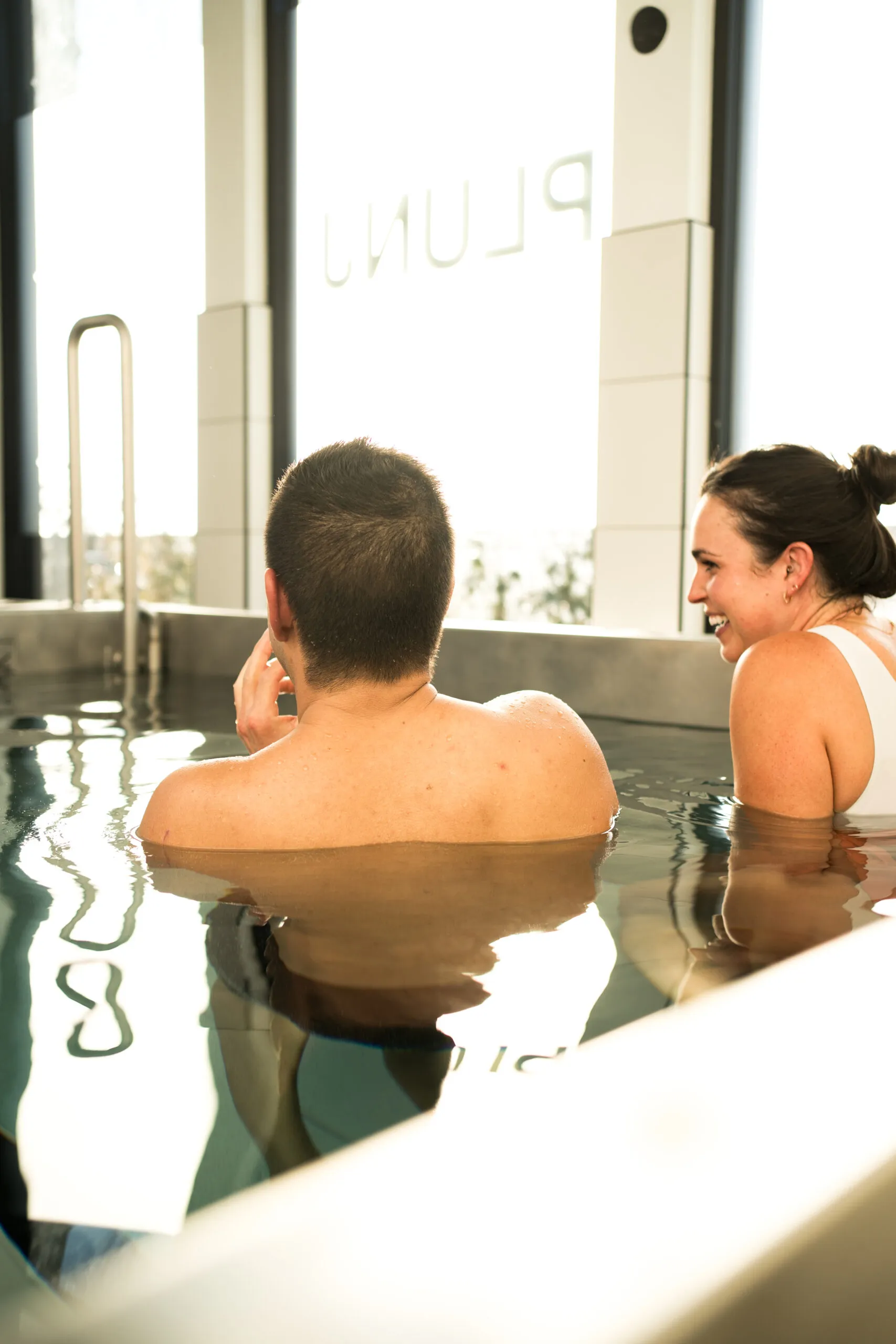
What are the Benefits of Contrast Therapy
By PLUNJ · August 4, 2026
Walk into any recovery-focused gym, spa, or wellness studio today and you'll see the same pairing everywhere: a cold plunge tub sitting a few feet from a sauna. That's not a design coincidence — it's contrast therapy, and it's one of the most researched, most effective recovery practices available outside of a doctor's office.
Contrast therapy is the practice of alternating between hot and cold exposure — typically a sauna or steam room followed by a cold plunge, repeated in cycles. The temperature swing does something neither extreme can do on its own: it forces your cardiovascular system to actively pump blood back and forth between your skin and your core, over and over, in a single session.
In this guide, we'll break down exactly what contrast therapy does to your body, the research behind it, and how to do it properly.
What Is Contrast Therapy?
Contrast therapy alternates two opposite stimuli:
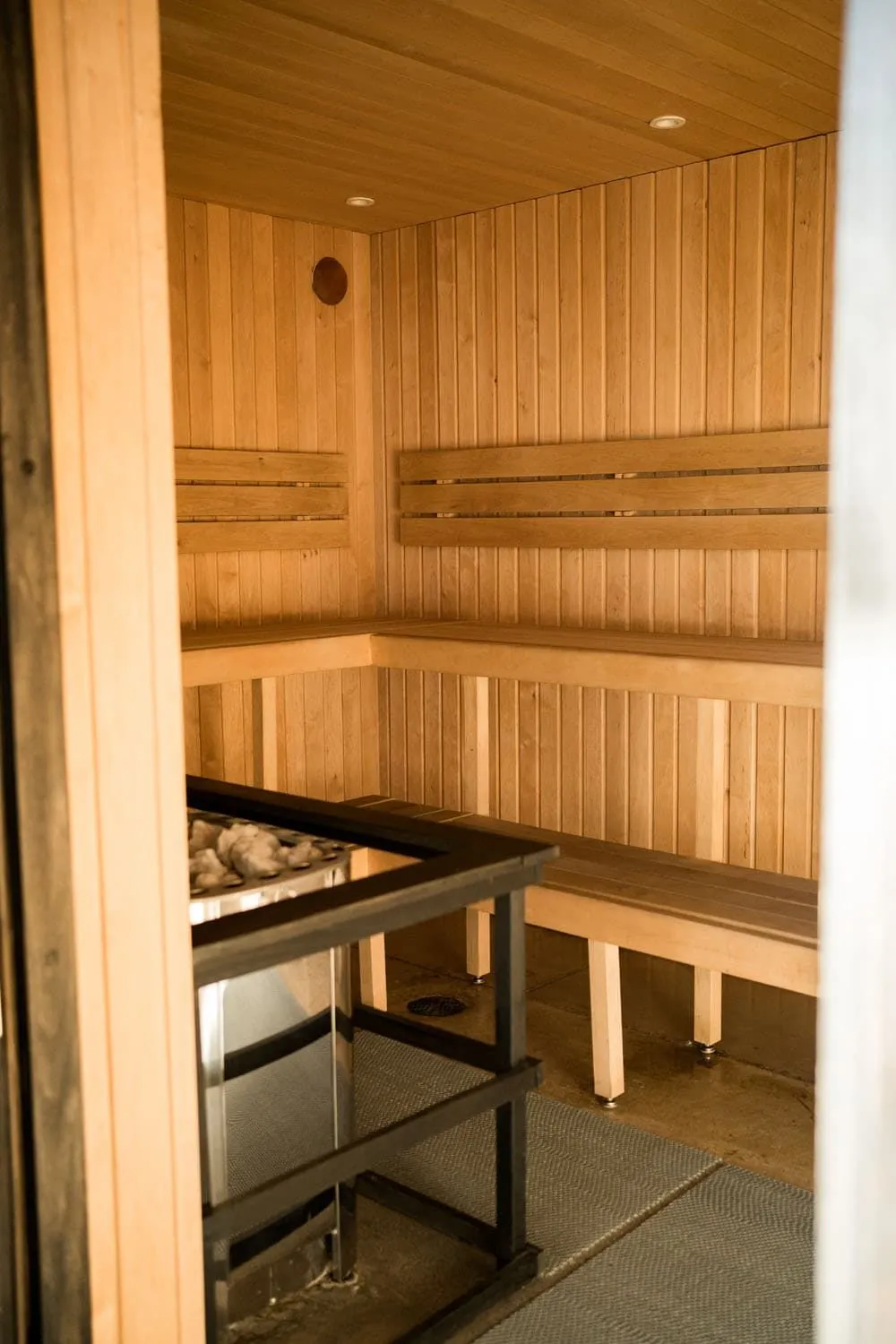
- Heat exposure (sauna, typically 150–200°F) dilates blood vessels, increases heart rate, and pushes blood toward the skin's surface.
- Cold exposure (cold plunge, typically 39–55°F) constricts blood vessels and pushes blood back toward your core to protect vital organs.
Cycling between the two — heat, then cold, repeated 2–4 times — creates a "pumping" effect in your circulatory system that neither hot nor cold alone can replicate. This is sometimes called vascular gymnastics.
The Research-Backed Benefits
1. Faster Muscle Recovery and Reduced Soreness
This is the most studied benefit of contrast therapy. When you exercise, you create micro-tears in muscle tissue and a buildup of metabolic waste (like lactate). Cold exposure constricts blood vessels and flushes out this waste; heat exposure that follows floods the area with fresh, oxygenated blood.
A review published in the International Journal of Sports Medicine found that contrast water therapy significantly reduced delayed onset muscle soreness (DOMS) and improved perceived recovery compared to passive rest alone. Athletes who alternate hot and cold after training consistently report less next-day soreness and faster return to full performance.
2. Improved Circulation and Cardiovascular Function
Repeatedly dilating and constricting your blood vessels is a workout for your vascular system. Over time, this contrast training improves vascular flexibility — the ability of your blood vessels to respond quickly to temperature and stress. Some research links regular cold-heat exposure to improved blood pressure regulation and heart rate variability (HRV), a key marker of cardiovascular and nervous system health.
3. Lower Inflammation
Cold exposure has a well-documented anti-inflammatory effect — it reduces swelling and blunts the release of pro-inflammatory cytokines after intense exercise or injury. Heat exposure, meanwhile, activates heat shock proteins that help repair damaged cells. Together, the hot-cold cycle appears to modulate inflammation more effectively than either extreme used alone, which is part of why contrast therapy is popular with athletes managing joint pain and chronic soreness.
4. A Mental Reset: Mood, Stress, and Focus
Cold water immersion triggers a spike in norepinephrine and dopamine — the same neurotransmitters responsible for focus and motivation. Research shows cold exposure at around 57°F can increase circulating dopamine by roughly 250%, producing a lasting mood lift well after you get out of the water.
Heat exposure works differently but complements it well: sauna bathing lowers cortisol (your primary stress hormone) and promotes the release of endorphins, leaving you in a relaxed, parasympathetic ("rest and digest") state. Going back and forth between the two — stress response, then deep relaxation — is part of why people describe contrast therapy sessions as an emotional reset, not just a physical one.
5. Better Sleep
Your body needs to drop its core temperature to fall asleep. A contrast therapy session — especially one that ends on cold — accelerates that temperature drop after you get home, which is why many people report their best sleep of the week falls on plunge days.
6. Long-Term Metabolic Benefits
Regular cold exposure activates brown adipose tissue (brown fat), a special type of fat that burns calories to generate heat rather than storing energy. Studies on repeated cold exposure show it can improve insulin sensitivity and support healthy metabolic function over time — benefits that compound the more consistently you practice it.
How to Do Contrast Therapy Correctly
There's no single "right" protocol, but a well-supported structure looks like this:
- Start with heat. Spend 10–15 minutes in the sauna, letting your core temperature rise and your heart rate climb.
- Move to cold immediately. Submerge in the cold plunge for 1–3 minutes. Focus on slow, controlled breathing — the first 30 seconds are the hardest, and they get easier.
- Repeat the cycle 2–4 times, always finishing on whichever temperature matches your goal: end on cold for an energizing, alert effect (great before a workout or in the morning), or end on heat for a relaxed, sleep-primed effect (great in the evening).
- Rehydrate. Both heat and cold exposure are diuretic — drink water before and after.
How Often Should You Do It?
Most people see meaningful benefits from 2–4 contrast therapy sessions per week. If you're training hard or managing chronic soreness, daily sessions are generally safe for healthy adults — just listen to your body and ease in gradually if you're new to cold exposure.
Who Should Be Cautious
Contrast therapy is safe for most healthy adults, but you should talk to a doctor first if you have uncontrolled high blood pressure, a heart condition, Raynaud's disease, or are pregnant. Never do cold plunge or sauna sessions alone if you have any cardiovascular concerns.
Contrast Therapy vs. Sauna Alone vs. Cold Plunge Alone
A common question is whether alternating hot and cold actually beats just doing one or the other. The honest answer: it depends on your goal.
- Sauna alone is excellent for relaxation, cardiovascular conditioning (regular sauna use is linked to lower risk of cardiovascular events), and stress reduction. But it doesn't deliver the sharp norepinephrine and dopamine spike that cold exposure does.
- Cold plunge alone is excellent for the mental toughness effect, the immediate mood boost, and reducing acute inflammation. But without heat afterward, some people find the "come down" harsher and recovery from the cold shock slower.
- Contrast therapy (both, alternating) gets you the benefits of each while adding the vascular pumping effect that neither produces alone. It's also, for most people, simply more comfortable — ending a cold plunge by stepping into a hot sauna (or vice versa) feels better than sitting with either extreme in isolation.
If you only have time for one, pick based on your goal: sauna for relaxation and long-term cardiovascular health, cold plunge for an immediate mental and inflammatory reset. If you have 20–30 minutes, contrast therapy gets you both.
What a Full Contrast Therapy Session Feels Like
If you've never done one, here's roughly what to expect walking into a session at a studio like PLUNJ:
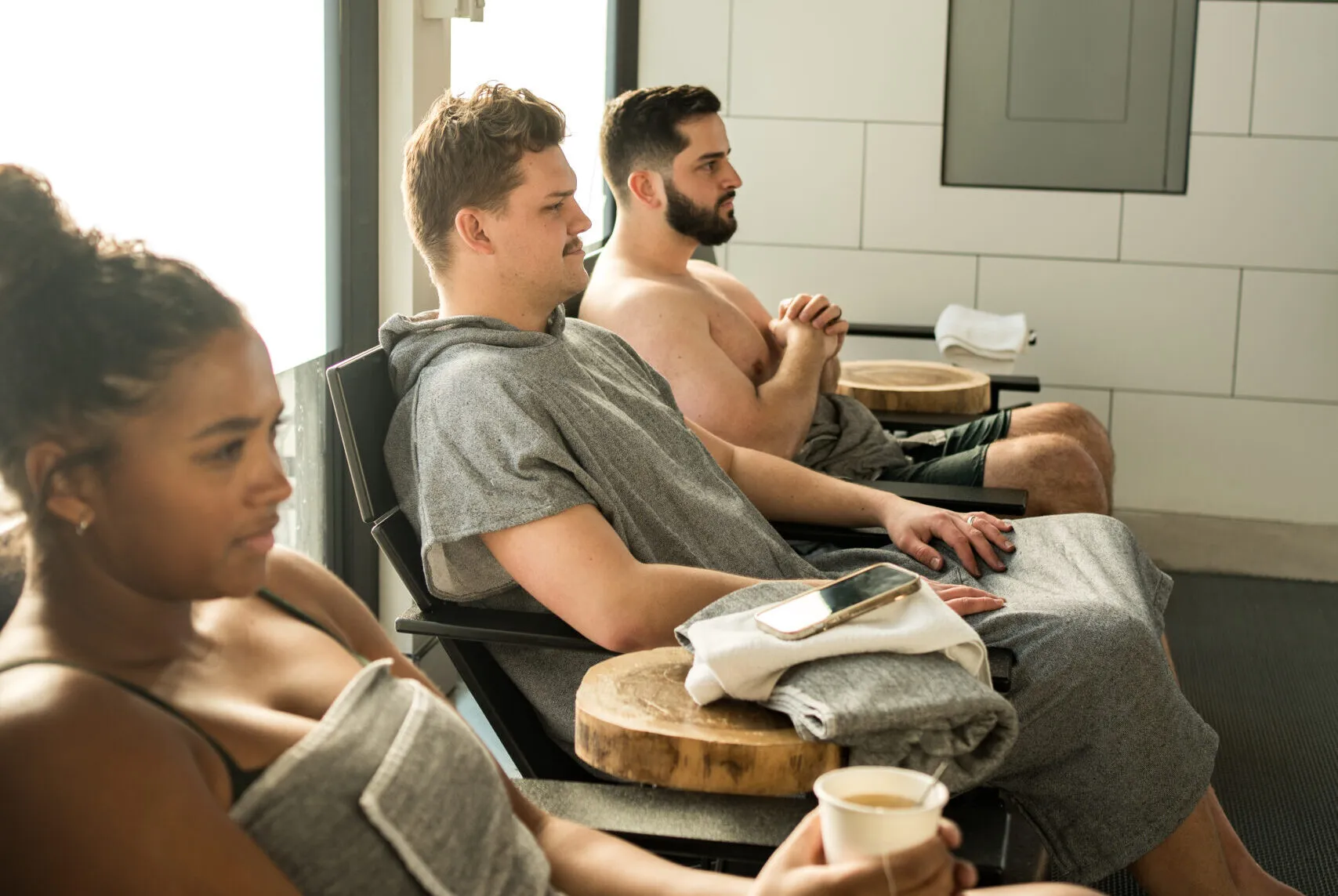
- You start in the sauna, and for the first few minutes it just feels warm and pleasant. By minute 8–10, your heart rate is up, you're sweating, and you're ready to move.
- You step into the cold plunge. The first 10–15 seconds are the hardest part of the entire session — your breath wants to catch, your instinct is to get out immediately. Slow, controlled exhales get you through it.
- Somewhere around the 45-second to 1-minute mark, the shock fades and is replaced by a strange, clear-headed calm. This is the shift from acute stress response to the "afterdrop" — your nervous system settling.
- You step out, and within a minute or two, a warm, buzzing, almost euphoric feeling sets in. This is the dopamine and endorphin response.
- You repeat the cycle 2–4 times, and by the end, most people describe feeling simultaneously calm and alert — a state that's genuinely hard to reach any other way.
Common Contrast Therapy Mistakes
- Skipping the cold and only doing sauna. You'll get relaxation benefits, but you'll miss the circulatory "pump" and the mood-boosting cold shock response entirely.
- Staying in the cold plunge too long, trying to prove something. Two to three minutes is enough to get the full physiological benefit. Beyond that, you're just accumulating discomfort without added upside.
- Not rehydrating. Heat and cold exposure are both diuretic. Skipping water before and after can leave you dehydrated and undercut how good you feel afterward.
- Doing it right before bed and ending on heat when you needed to be alert, or ending on cold when you needed to wind down. Match your last temperature to what you need next.
- Going in tense. Fighting the cold with clenched muscles and shallow breathing makes the first minute far harder than it needs to be. Slow nasal breathing changes the experience dramatically.
Experience It for Yourself
Reading about the benefits of contrast therapy is one thing — feeling the dopamine hit when you step out of a cold plunge after 15 minutes in the sauna is another. At PLUNJ, every location is built around this exact hot-cold cycle, with a full sauna and cold plunge on-site so you can move between the two seamlessly.
Ready to try it? Book your first contrast therapy session at PLUNJ and find a studio near you.
Sources:
Bleakley, C. M., Bieuzen, F., Davison, G. W., & Costello, J. T. (2014). Whole-body cryotherapy: empirical evidence and theoretical perspectives. Open Access Journal of Sports Medicine, 5, 25–36.
Hyldahl, R. D., & Peake, J. M. (2020). Combining cooling therapies with other recovery modalities. International Journal of Sports Medicine.
Leppäluoto, J., Westerlund, T., Huttunen, P., Oksa, J., Smolander, J., Dugué, B., & Mikkelsson, M. (2008). Effects of long-term whole-body cold exposure on plasma concentrations of ACTH, beta-endorphin, cortisol, catecholamines and cytokines in healthy females. Scandinavian Journal of Clinical and Laboratory Investigation, 68(2), 145–153.
Ruiz, J. R., Martinez-Tellez, B., Sanchez-Delgado, G., Osuna-Prieto, F. J., Rensen, P. C. N., & Boon, M. R. (2018). Role of Human Brown Fat in Obesity, Metabolism and Cardiovascular Disease. Progress in Cardiovascular Diseases, 61(2), 232–245.
Šrámek, P., Šimečková, M., Janský, L., Šavlíková, J., & Vybíral, S. (2000). Human physiological responses to immersion into water of different temperatures. European Journal of Applied Physiology, 81(5), 436–442.